
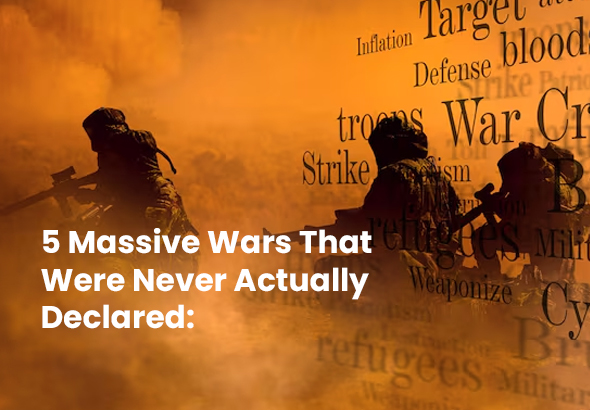
Undeclared wars and decades long military conflicts history
Korea. Vietnam. Kargil. Afghanistan. Yeh sab “wars” the — logon ne ladi, loge mare, nations ne resources spend kiye. Lekin officially? Inhe kabhi “war” declare nahi kiya gaya. Aur yeh sirf technicality nahi hai — iska real, legal, aur human impact tha.
Zyada tar modern conflicts officially “war” declare nahi ki jaati kyunki formal war declaration ke saath specific legal obligations trigger hote hain — Geneva Convention ke stricter provisions, civilian rights protections, neutral countries ke rights. Governments “police action,” “military operation,” ya “armed conflict” terms use karti hain taaki political flexibility maintain rahe aur international law ki full weight se bache. Korea, Vietnam, Afghanistan — inhe kabhi officially “war” nahi kaha gaya.
Officially “War” Declare Karne Ka Matlab Kya Hota Hai?
Yeh sirf words ka game nahi hai. War declaration ek legally significant act hai — aur iske specific consequences hote hain jo governments often avoid karna chahti hain.
International law mein — specifically Hague Conventions aur Geneva Conventions ke through — formal war declaration ke baad kuch specific rules automatically apply hote hain. Neutral countries ki rights protected hoti hain. Prisoners of war ki treatment ke strict rules hote hain. Civilian populations ki protections activate hoti hain.
The Legal Definition — Why It Actually Matters
US Constitution mein specifically Congress ko war declare karne ka power diya gaya hai — President ko nahi. Lekin last formal war declaration US ne 1942 mein ki thi — World War II ke against Romania, Hungary, aur Bulgaria. Korean War (1950), Vietnam War (1964), Gulf War (1990), Afghanistan (2001), Iraq (2003) — koi bhi officially “war” declare nahi tha.
Fascinating loophole: “Authorization for Use of Military Force” (AUMF) — Congress yeh pass kar deta hai, jo President ko military power use karne ki permission deta hai — bina technically “war” declare kiye. Yeh constitutional grey area hai jisme US pichle 80 saalon se operate kar raha hai. Soldiers fight karte hain, log marte hain, lekin legal document mein “war” word nahi hota.
Kyun governments yeh avoid karti hain? Multiple reasons hain — domestic political costs, alliance obligations, economic implications, aur most importantly: war declaration ke baad exit karna politically aur legally much harder ho jaata hai.
Korean War — “Police Action” Jisme 36,000 Americans Mare
June 25, 1950. North Korea ne South Korea pe attack kiya. US aur UN forces respond kiye. Teen saal ladai. 36,574 American deaths. Approximately 2.5 million total casualties — military aur civilian combined.
Officially? President Truman ne ise “police action” kaha — war nahi. UN resolution tha jo “peace” restore karne ke liye force authorize karta tha — war declare karne ke liye nahi.
Aaj bhi — 2024 mein — Korean War technically ended nahi hua hai. 1953 mein sirf armistice sign hua — ceasefire agreement. Peace treaty kabhi nahi hua. North aur South Korea technically still “at war” hain — ek war jo kabhi officially declare nahi ki gayi aur officially end bhi nahi hui.
Korean War Veterans ka ek common complaint tha: woh “Forgotten War” ke veterans the — Vietnam veterans ko protests mila (negative), WWII veterans ko glory mili, lekin Korean War veterans ko acknowledgment hi nahi mili. Partly kyunki war kabhi officially war tha hi nahi — public consciousness mein “police action” bahut alag feel karti hai.
Vietnam War — Congress Ne Kabhi War Declare Nahi Ki
Vietnam War — jisme 58,220 Americans mare, approximately 2 million Vietnamese civilians mare, aur jo 20 saalon tak (1955–1975) chala — kabhi officially declared war nahi tha.
1964 mein Gulf of Tonkin Resolution pass hua — jo President Johnson ko military force use karne ki broad authority deta tha. Lekin yeh war declaration nahi tha — yeh authorization tha. Important legal distinction.
Aur Gulf of Tonkin incident khud — jis pe yeh resolution based tha — controversial hai. North Vietnamese torpedo boats ne allegedly US ships pe attack kiya. Later evidence suggest karta hai ki second attack possibly hallucinated tha ya fabricated. Ek war — jo war nahi thi — ek incident pe based thi jo shayad hua hi nahi tha.
Cold War Proxy Conflicts — Wars Without Names
Cold War (1947–1991) mein US aur Soviet Union directly kabhi nahi lade — lekin dozens of proxy wars fund kiye aur facilitate kiye. Angola, Nicaragua, Afghanistan, Mozambique, Ethiopia — har jagah ek side ko weapons, training, aur money mili.
- Angola (1975–2002):
US-backed UNITA vs Soviet-backed MPLA. 500,000+ deaths. 27 saal chala. Technically ek “civil war” tha — lekin externally funded aur directed. - Nicaragua (1979–1990):
US-funded Contras vs Soviet-backed Sandinistas. US Congress ne officially funding ban ki — CIA ne secretly continue ki. Iran-Contra scandal yahi se aaya. - Soviet-Afghan War (1979–1989):
US ne Mujahideen ko billions mein weapons diye. Officially — US “involved” nahi tha. Unofficially — CIA ka Operation Cyclone history ka largest covert operation tha. - Korea (already discussed):
Both US aur China directly involved — lekin “officially” sirf UN operations aur Chinese “volunteers” the.
Yeh “wars without names” millions of lives le gayi — lekin kisi bhi official history mein US-Soviet War ke roop mein record nahi hui. Language deliberately chosen thi reality ko obscure karne ke liye.
India Ke Context Mein — Kargil Officially “War” Tha?
Yeh India-specific angle bahut interesting hai. 1999 ka Kargil conflict — jisme 527 Indian soldiers shaheed hue aur hundreds more Pakistani soldiers — officially “war” nahi tha.
India ne officially ise Operation Vijay kaha — ek military operation, war nahi. Pakistan ne officially deny kiya ki unke regular army troops involved the — kehte rahe ki sirf “militants” the (jo baad mein Pakistani Army ke regular soldiers nikle).
Kyun dono sides ne “war” word avoid kiya? Kyunki 1999 mein dono countries nuclear-armed thi. “War” declaration escalation ke liye pressure create karta. “Limited military operation” ke roop mein — diplomatic off-ramps available the. Nuclear deterrence ne actually “war” word se dono sides ko dara diya.
Similarly, 1962 Sino-Indian War ko India officially “Sino-Indian War” kehta hai — China officially ise “Counter-Attack War of Self-Defense on the Sino-Indian Border” kehta hai. Same conflict, radically different official names — kyunki naming itself political act hai.
1971 Indo-Pakistani War — jisme Bangladesh bana — officially India ke perspective se war tha. Lekin US aur Soviet Union ke involvement (Seventh Fleet ka Bay of Bengal mein aana, Soviet submarines ka counter-response) — yeh “acknowledged” nahi hua diplomatically. Superpower brinkmanship jo officially nahi hua.
Soldiers Ko Kya Farq Padta Hai — Legal Status Ka
Yeh sirf academic question nahi hai — iska real human impact tha aur hai.
- Veterans benefits:
Korea mein pehle — “police action” veterans ko WWII veterans jaisi benefits nahi mili. Congress ko specifically legislation pass karni padi benefits extend karne ke liye. - Prisoner of War status:
Officially undeclared conflict mein captured soldiers ka POW status ambiguous hota hai. Geneva Convention technically “war” ke prisoners ko protect karta hai. - Psychological impact:
“You were in a war” vs “You were in a police action” — yeh distinction veterans ki identity pe deep impact karta hai. Recognition matters psychologically. - Legal accountability:
War crimes prosecution technically easier hoti hai declared war mein. Undeclared conflicts mein accountability mechanisms weaker hote hain. - Political recognition:
Korea Veterans ko “Forgotten War” kaha jaata tha — partly kyunki ek “police action” war jaisi feel nahi karti public discourse mein.
Aaj Ki Duniya Mein — Kya “War” Kabhi Officially Declare Hogi?
Ukraine-Russia conflict — officially Russia mein ise “Special Military Operation” kaha jaata hai. “War” word Russia mein officially banned hai is context mein — civilians ko jail hua sirf yeh word use karne ke liye. Ukraine obviously ise war kehta hai.
Israel-Gaza conflict — officially “war” hai Israel ki perspective se (Israel ne war declaration ki — 2023 mein first time decades mein). Lekin international law mein iska status contested hai — Gaza official state nahi hai, toh “war” between states ka technical definition apply nahi hota.
Pattern clear hai: jitni complex modern geopolitics hoti hai — utna hi “war” word carefully avoid ya selectively use hota hai. Language politics ka tool hai. Aur jab tak nuclear weapons exist karte hain — major powers ke beech formal war declaration increasingly unlikely hai. Deterrence ne “war” ko simultaneously zyada expensive aur less likely banaya hai.
Lekin “armed conflict,” “military operation,” “counter-terrorism action” — yeh sab chalte rahenge. Bombs girengi. Log marenge. Sirf woh word nahi hoga.
Kya “War” Sirf Ek Word Hai — Ya Kuch Zyada?
Comment mein batao — kya aapko lagta hai Kargil ko officially “war” kehna chahiye tha? Aur Russia-Ukraine conflict ke baare mein — “special military operation” vs “war” — yeh naming aapko kaise lagti hai? Yeh post apne history-lover dost ke saath share karo.
The Legacy of Undeclared Wars: Why Definitions Matter
The shift away from “Official Declarations of War” isn’t just a legal loophole; it’s a fundamental change in how the modern world handles conflict. By avoiding a formal declaration, nations often bypass international scrutiny and domestic oversight. As we look back at these decades-long struggles, from Vietnam to modern proxy wars, it becomes clear that the absence of a “piece of paper” doesn’t lessen the human cost. Understanding these “undeclared” conflicts is essential for anyone trying to make sense of the complex, grey-area geopolitics we live in today.
About the Author